While many families are busy buying school supplies and getting kids back into a routine, Pennsylvania is rewriting the rules that govern public-health authority in their schools. You have until September 21, 2026 to weigh in.
The Pennsylvania Department of Health is proposing a sweeping rewrite of the regulations governing communicable and noncommunicable diseases. These changes are not final, and Pennsylvanians have an opportunity to comment before they move forward.
Remember COVID?
Schools closed. Children were masked. Businesses were restricted. Families dealt with quarantine, contact tracing and public-health directives that suddenly affected nearly every part of everyday life.
Most Pennsylvanians weren’t reading statutes or regulations at the time. But many began asking an important question:
What authority does the government actually have—and what limits should there be on that authority?
Those questions reached the courts. And in 2021, Pennsylvania voters amended our state Constitution to place new limits and legislative checks on disaster emergency declarations.
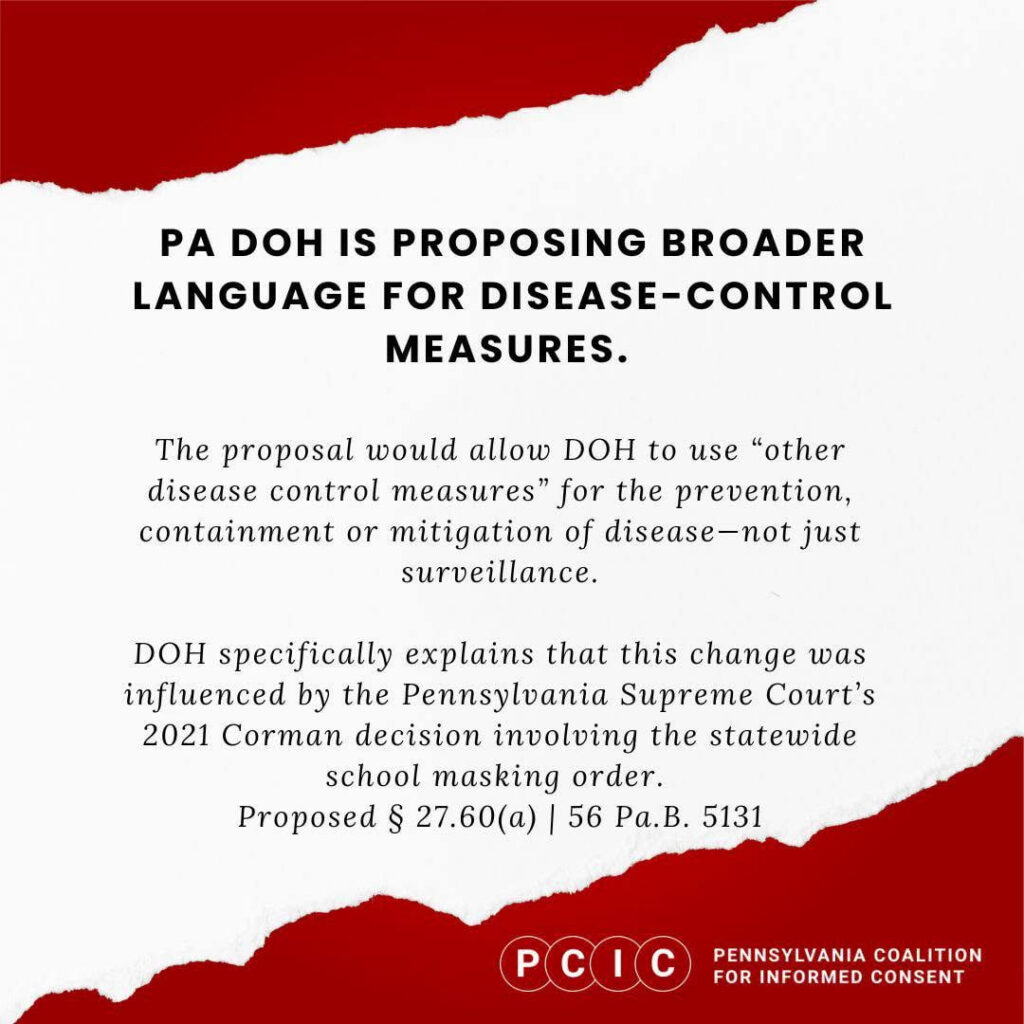
Five years later, the Pennsylvania Department of Health (DOH) is proposing a major rewrite of 28 Pa. Code Chapter 27, Pennsylvania’s regulations governing communicable and noncommunicable diseases.
The proposal was published on August 8, 2026, and the public has only 45 days to comment.
That timing matters.
It arrived just as families are preparing for a new school year, with the comment period running across Labor Day weekend. Between school supplies, sports, new schedules, work and family responsibilities, many Pennsylvanians may never know these changes are being considered until the opportunity to comment has passed.
Don’t let that happen.
This Is NOT Just About Children or Schools
Several provisions should be of particular concern to parents because they directly involve schools and students.
But these regulations are not limited to families with children.
Chapter 27 establishes public-health rules that can affect patients, health care professionals, schools, businesses, farmers, religious communities and individual Pennsylvanians.
The proposal addresses disease reporting and investigations, isolation and quarantine, medical records, vaccination reporting, access to students, animals and food products, religious accommodations and other disease-control measures.
Whether you have children or not, this proposal deserves your attention.
The Bigger Question: Who Should Make These Decisions?
The individual provisions matter. But PCIC believes there is a larger issue Pennsylvanians should consider:
Who should have the authority to make decisions that significantly affect individual liberty, medical privacy, religious exercise and parental rights?
Pennsylvania legislators are elected by the people.
They introduce legislation. They debate it publicly. They cast recorded votes. They answer to constituents.
And if Pennsylvanians disagree with the decisions they make, we can vote them out of office.
Department officials and agency appointees are different. They are not directly elected by Pennsylvania voters.
To be clear, state agencies do not simply create authority for themselves. The General Assembly passes laws granting agencies regulatory authority, and proposed regulations go through Pennsylvania’s regulatory-review process.
But that makes the scope of the authority granted—and the discretion contained within regulations—extremely important.
The broader the discretion placed into regulation, the more consequential decisions may be made administratively without requiring our elected legislators to return to the Capitol and cast a new vote.
PCIC believes major public-health policies affecting fundamental rights should be subject to strong legislative oversight and meaningful democratic accountability.
That is especially important when government decisions can affect parental authority, religious exercise, medical privacy, bodily autonomy and individual liberty.
COVID showed us why these questions cannot wait until an emergency.
Here are several provisions in the current proposal that deserve your attention.
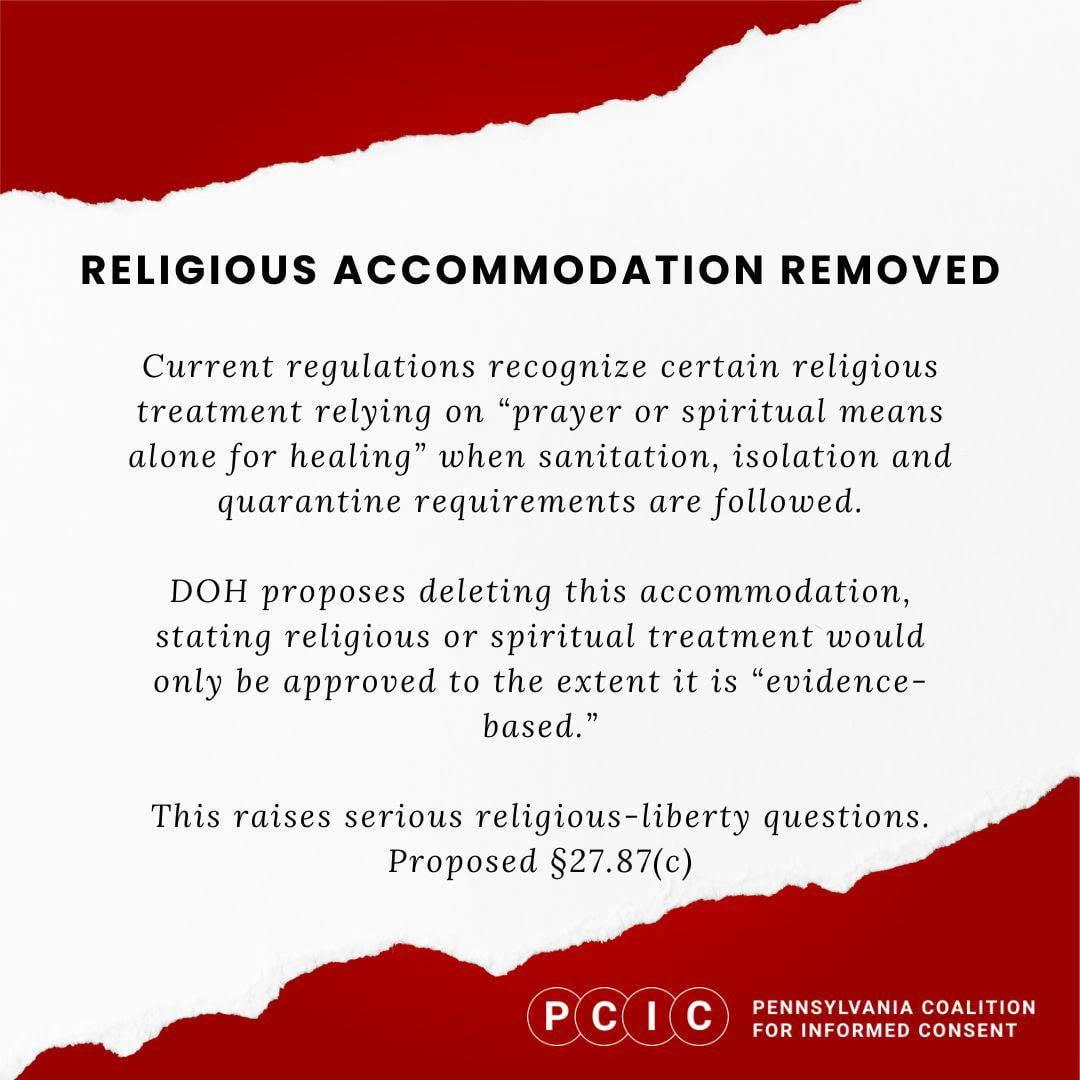
1. DOH Proposes Eliminating an Existing Religious Accommodation
Pennsylvania’s current disease-control regulations contain an explicit accommodation for certain religious treatment.
Current § 27.87(c) provides that treatment approved by the Department may include treatment by an accredited practitioner of a well-recognized church or religious denomination that relies upon prayer or spiritual means alone for healing, provided requirements relating to sanitation, isolation or quarantine are satisfied.
DOH proposes deleting this subsection.
In explaining the proposed deletion, the Department states that it relies upon evidence-based treatments and would approve church, religious or spiritual treatment only to the extent that it is evidence based.
This is significant.
The existing regulation does not allow religious belief to override sanitation, isolation or quarantine requirements. Those requirements still must be satisfied.
Instead, the existing provision preserves an accommodation concerning treatment for individuals whose religious beliefs rely upon prayer or spiritual means for healing.
Removing that express accommodation raises serious religious-liberty questions.
Why should recognition of a religious or spiritual treatment depend upon whether the Department considers that treatment “evidence-based”?
What problem has the existing accommodation caused?
Why is deleting it necessary when sanitation, isolation and quarantine requirements already remain in place?
Were less restrictive alternatives considered?
Religious protections matter most when an individual’s sincerely held beliefs differ from the government’s preferred course of action.
Pennsylvanians deserve a clear explanation of why this protection is being removed.
2. Government Access to Students for Contact Tracing and Partner Services
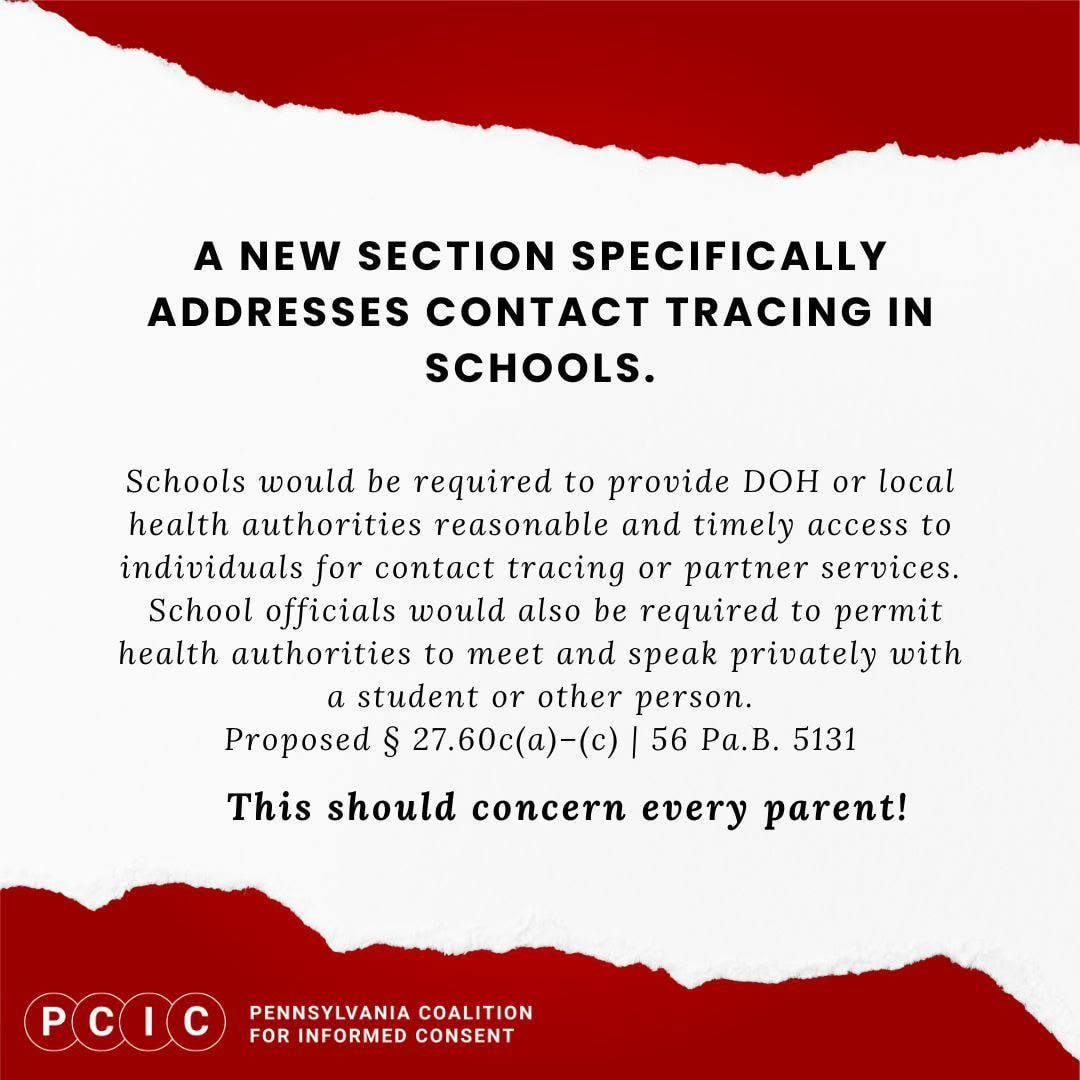
Proposed § 27.60c would require schools to provide DOH or a local health authority with reasonable and timely access to a person for contact tracing or partner services, including while classes are in session, while the person is on school property or while attending a school function.
The proposed language also addresses school employees and officials permitting health authorities to meet and speak privately with a student or other person.
Parents should understand exactly what this means.
What notice will parents receive before a government health official meets privately with their child?
When is parental consent required—and when isn’t it?
What questions may be asked?
What information may be collected?
What protections apply to information obtained from a student?
These questions should be answered clearly before the next outbreak or public-health emergency—not during one.
3. Access to Patient Medical Records
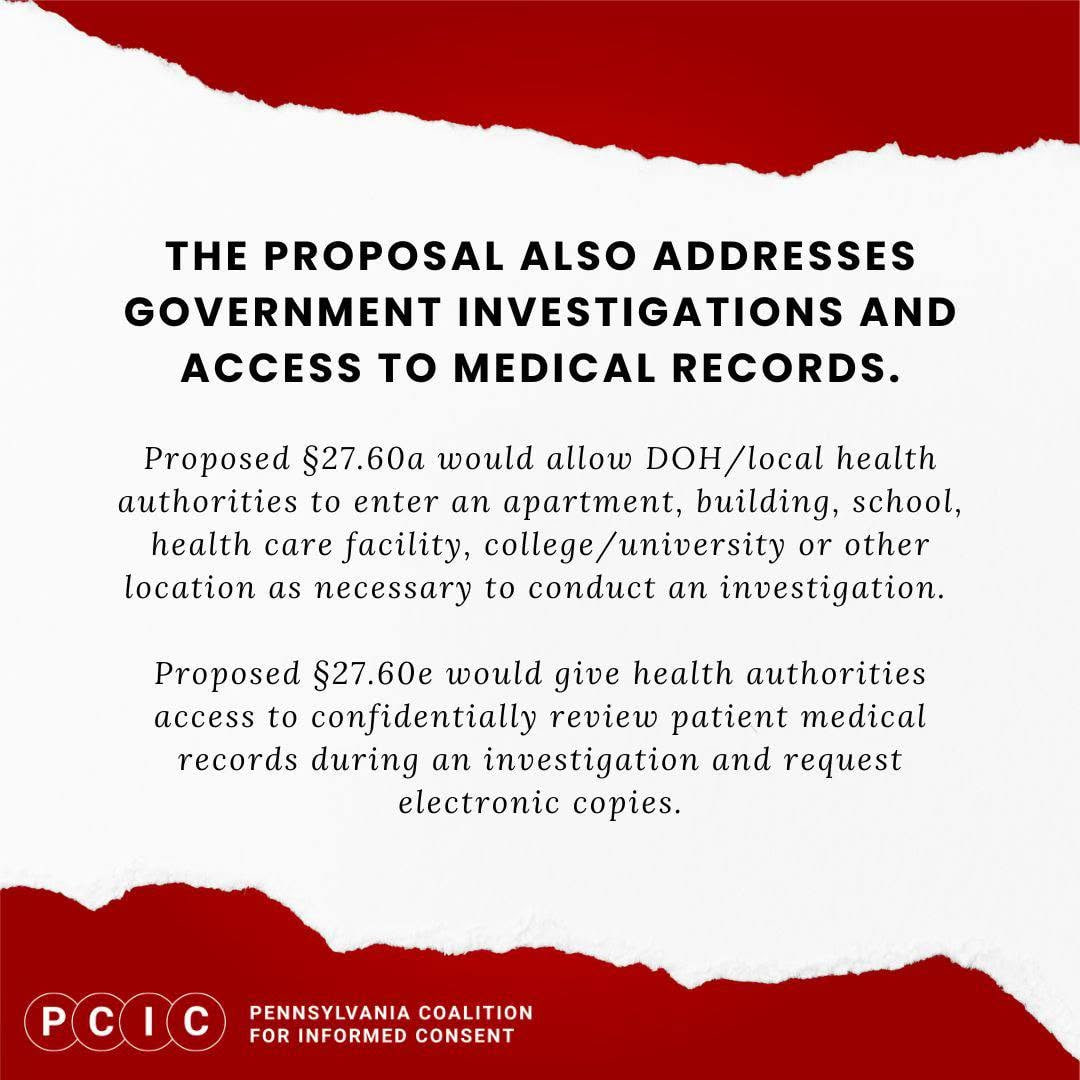
Proposed § 27.60e addresses confidential review of patient medical records during disease investigations.
Existing regulations already allow DOH or local health authorities to conduct confidential reviews of medical records.
The proposal expressly states that DOH or a local health authority shall have access to patient medical records maintained by health care practitioners, hospitals and other health care facilities during an investigation.
It would also permit authorities to request copies of those records and require electronic transmission in a secure manner acceptable to DOH or the local health authority.
Patients deserve to know the boundaries of that authority.
What determines which records are relevant?
How much of a patient’s medical record may be accessed?
What protections exist for medical information unrelated to the disease or condition being investigated?
Who may access copies, and how long are they retained?
Medical privacy should not become an afterthought during a public-health investigation.
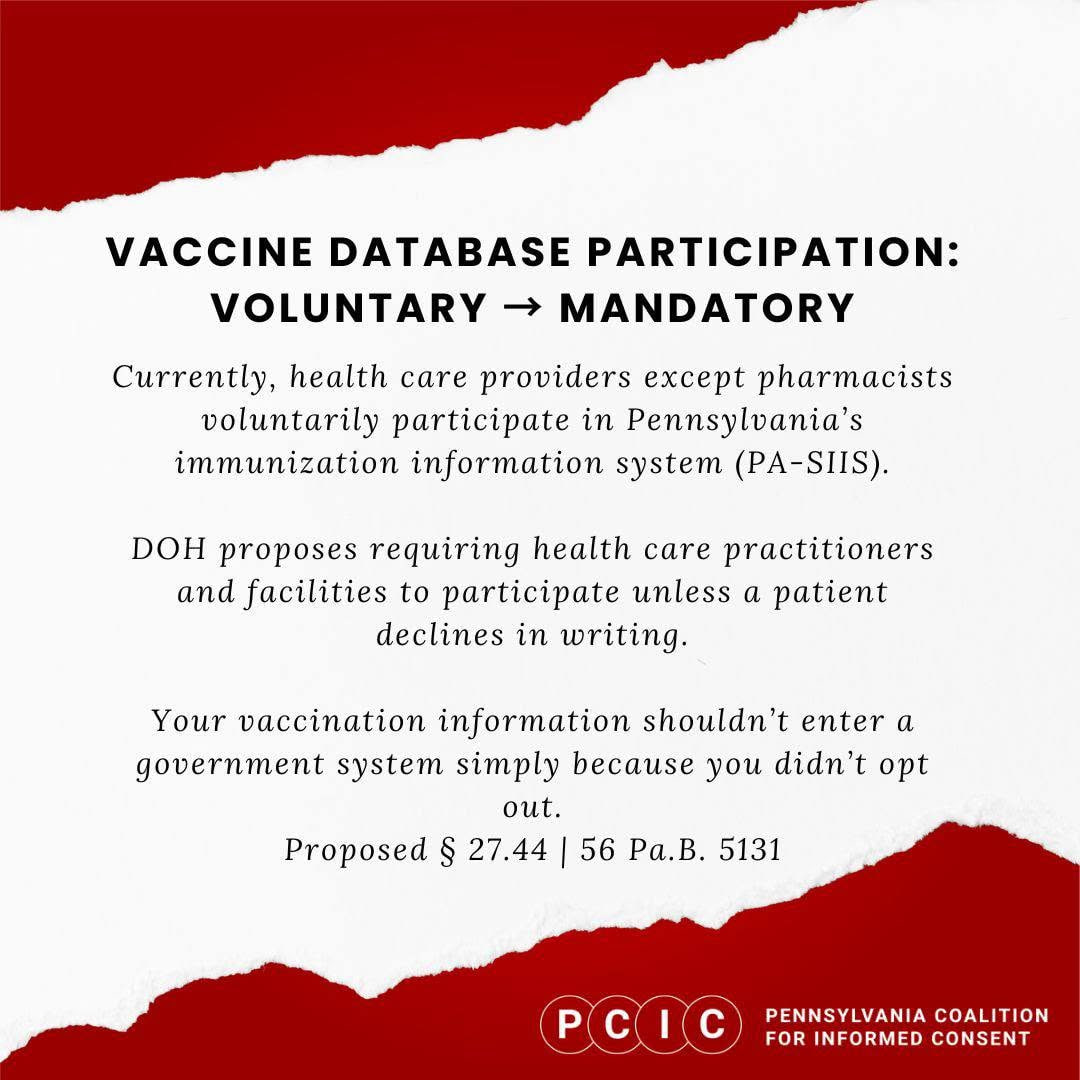
4. Immunization Reporting Would Shift From Voluntary Participation to Required Participation Unless a Patient Opts Out
Pennsylvania already operates an immunization information system.
DOH proposes changing the framework so that health care practitioners and facilities subject to the provision would be required to participate and report vaccine administration unless the patient declines reporting in writing.
In other words, the framework shifts from generally voluntary provider participation to required participation with a patient opt-out.
The reporting can include identifiable patient information along with information about the vaccine administered.
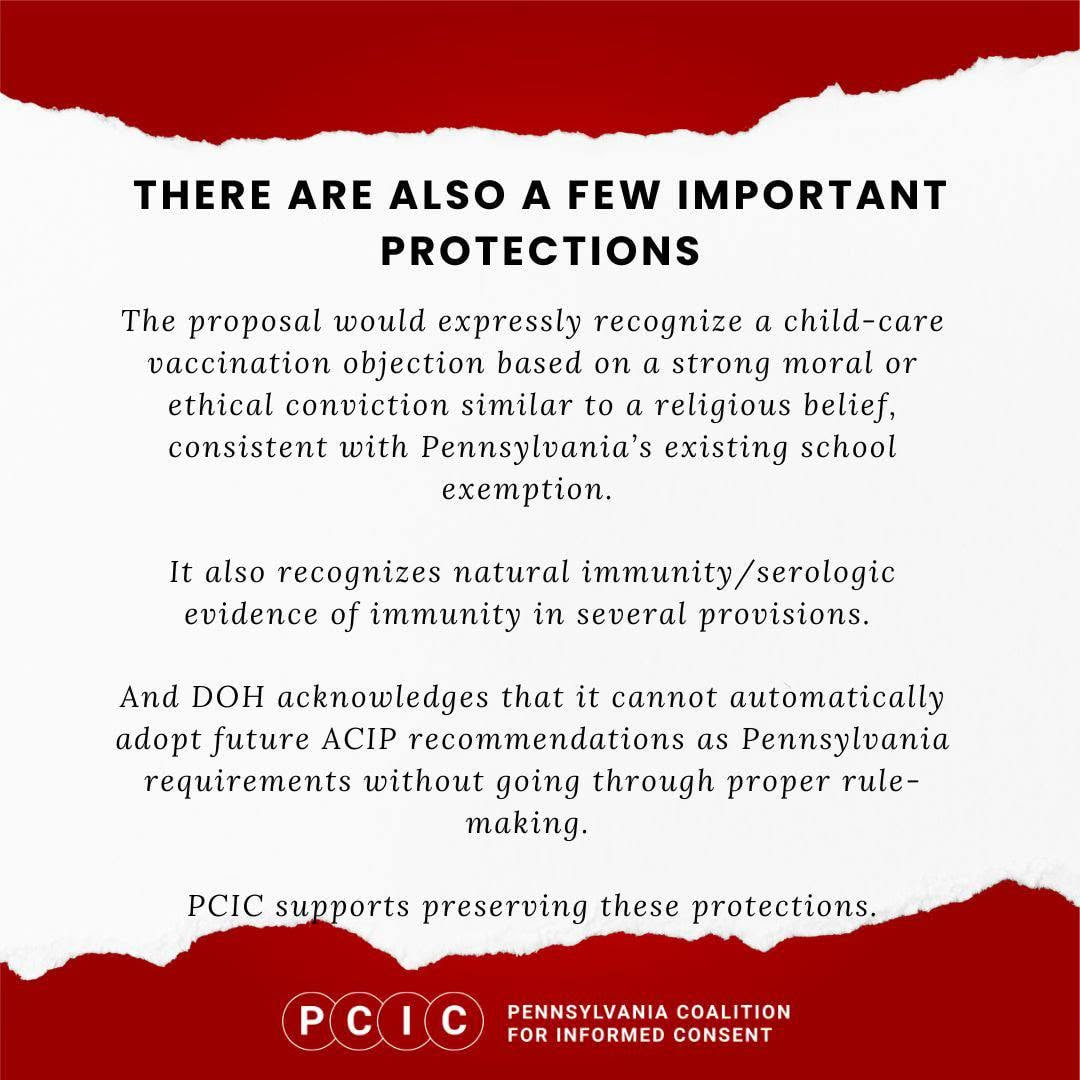
Importantly, the proposal preserves a patient’s ability to decline reporting.
But an opt-out only protects informed choice if people know it exists.
How will patients be told about their right to decline?
Will they be informed before their information is reported?
Will declining reporting affect access to care?
How will a written refusal be documented and honored?
A right you don’t know you have is difficult to exercise.
5. Expanded Disease, Infection and Condition Reporting
The proposal substantially revises Pennsylvania’s reportable disease framework.
Proposed § 27.21a requires health care practitioners and facilities to report listed diseases, infections or conditions when they diagnose, treat or suspect, because of symptoms or appearance, that a person has one of the reportable conditions, subject to specified provisions.
An important distinction: suspicion-based reporting itself is not entirely new. Existing regulations already contain similar reporting language.
What is changing is the scope and structure of the diseases, infections and conditions subject to reporting.
The proposal significantly expands the reporting list and also creates a category for an “emerging disease or condition.”
Public-health surveillance can serve legitimate purposes. But when government reporting can occur before a diagnosis is confirmed, definitions, thresholds and privacy safeguards matter.
What triggers a report?
What information about the individual is sent to government?
How is it used?
How long is it retained?
And how broadly can an “emerging disease or condition” provision be applied?
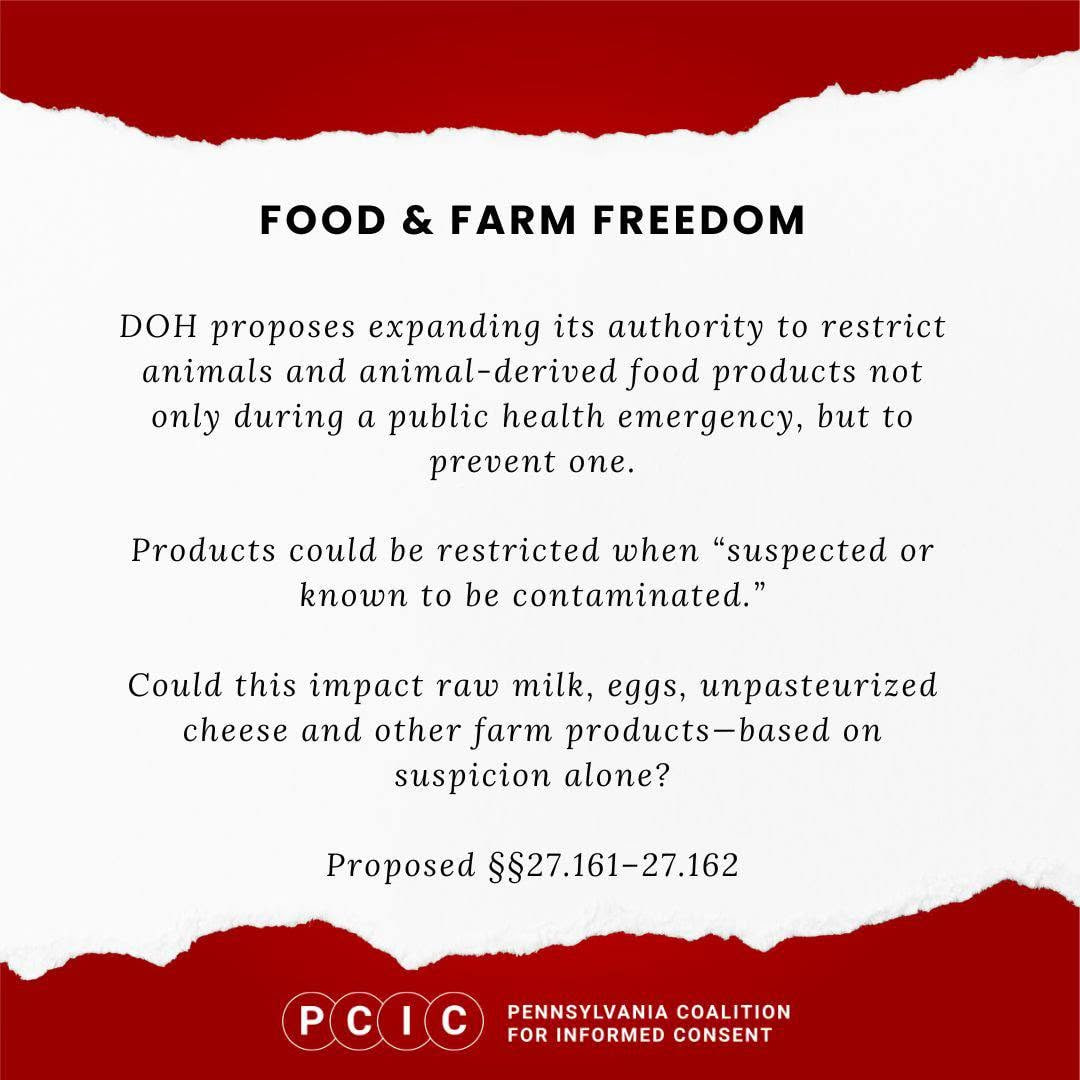
6. Expanded Authority Involving Animals and Animal Products
DOH is also proposing changes concerning animals and animal-related products and materials.
The Department explains that it wants the relevant authority to apply not only during a public-health emergency but also when acting to prevent one.
The proposal encompasses animals and animal products and materials, including animal bedding, carcasses, feed, waste, equipment used for animal care and food products made from animals.
This deserves attention from farmers, small producers and consumers.
What evidence must exist before government restricts a product?
What does “suspected” contamination mean?
What due-process protections exist for farmers and producers?
How quickly can a restriction be challenged?
Could perishable food or other products be restricted before contamination is confirmed?
Protecting the public from contaminated food is a legitimate government function. That does not eliminate the need for clear standards, due process and appropriate limits on government authority.
Why Your Comment Matters
These regulations are proposed—not final.
This is precisely when the public is supposed to participate.
You do not have to be an attorney, physician or policy expert.
You don’t need to write five pages.
And you don’t need to comment on every provision.
Pick the issue that matters to you and tell DOH why.
Ask questions. Request clarification. Explain how a provision could affect you, your family, your patients, your business, your farm, your religious beliefs or your community.
Most importantly, use your own words.
You might ask:
- Why is the existing religious treatment accommodation being eliminated?
- What problem has that accommodation caused, and were less restrictive alternatives considered?
- What protections exist for parents when health authorities seek access to students at school?
- When must parents be notified?
- What limits apply to government access to patient medical records?
- How will patients be informed of their right to decline immunization reporting?
- What safeguards apply when disease reporting is based upon suspicion rather than confirmed diagnosis?
- How will an “emerging disease or condition” be determined?
- What evidentiary standard applies before animals, agricultural materials or food products are restricted?
- What due-process protections exist for affected individuals and businesses?
Tell the Department:
What concerns you.
Why it concerns you.
What you want clarified.
And what you believe should be changed.
How to Submit Your Comment
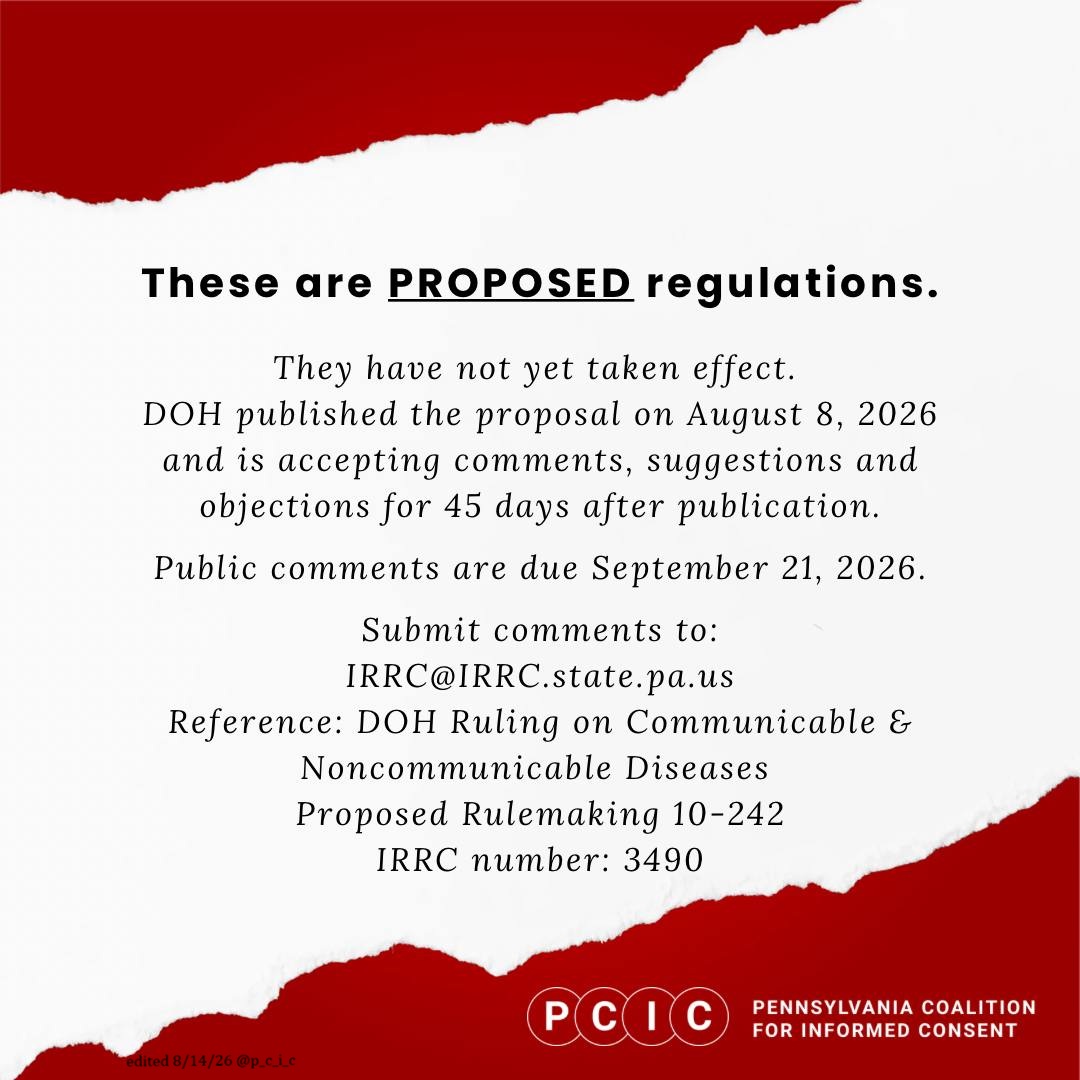
The proposed regulations were published August 8, 2026, and DOH is accepting comments, suggestions and objections for 45 days following publication.
DOH prefers comments by email:
Identify your comment as pertaining to:
Proposed Rulemaking 10-242
Communicable and Noncommunicable Diseases
Comments may also be mailed to:
Theresa Kash
Pennsylvania Department of Health
625 Forster Street, 8th Floor West
Health and Human Services Building
Harrisburg, PA 17120
Don’t Let This Comment Period Quietly Pass
Back-to-school season is busy. Labor Day is approaching. Families are juggling work, school, sports and everything else that comes with the end of summer.
That is exactly why we’re asking you to stop and pay attention.
These regulations aren’t just about what happens during an outbreak.
They’re about the framework of authority that will already be in place when the next public-health challenge occurs.
COVID taught many Pennsylvanians to start asking questions about government authority that they had never thought to ask before.
Let’s not wait for another emergency to ask them again.
How much authority should government have?
What decisions should require action by our elected representatives?
What safeguards protect our medical privacy, religious liberty and individual rights?
What protections do parents retain when decisions involve their children?
And when government gets it wrong:
Who answers to the people?
The time to ask those questions is before these regulations become final.
Read it. Question it. Comment on it. Share it.
Social Media Toolkit:
– Facebook: www.facebook.com/share/p/
– Telegram: https://t.me/
– X: https://x.com/p_c_i_c/status/
– Instagram: https://www.instagram.com/p/