
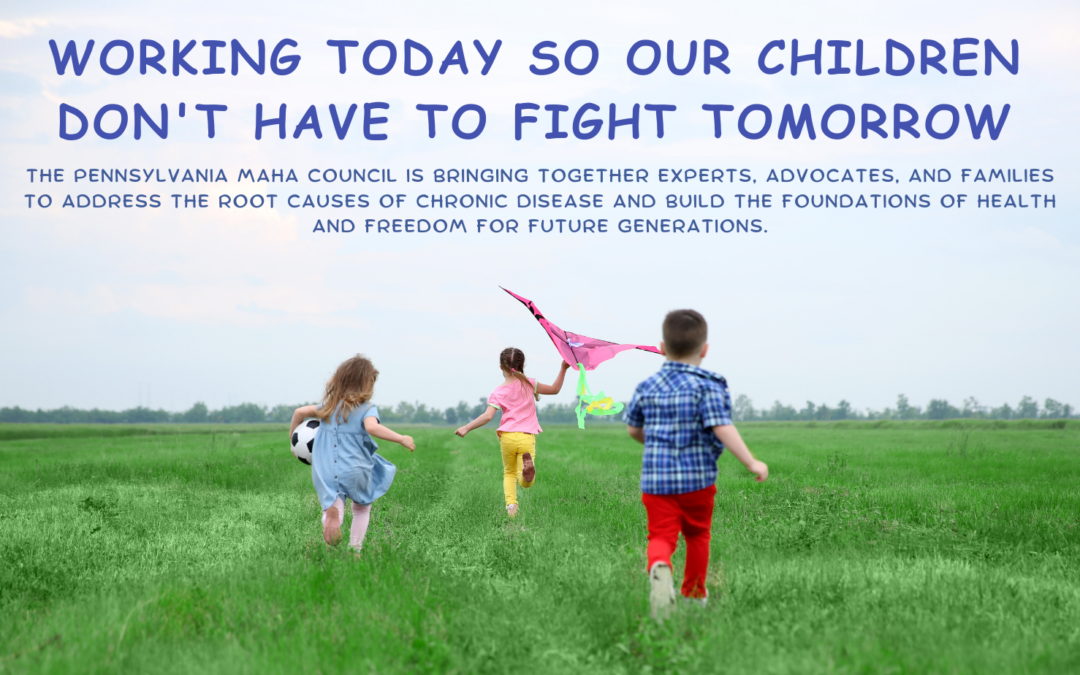
The Pennsylvania MAHA Council was formed through a partnership of Pennsylvania organizations, advocates, subject matter experts, healthcare professionals, farmers, educators, parents, and community leaders who share a common goal: improving health outcomes by addressing the root causes of chronic disease. Inspired by the national Make America Healthy Again (MAHA) movement and supported by the MAHA Institute’s state-based framework, the Council serves as a collaborative forum where experts and citizens can identify emerging issues, evaluate policy proposals, and provide legislators with informed recommendations.
Unlike traditional advocacy efforts that focus on individual symptoms or isolated issues, the Pennsylvania MAHA Council is committed to examining the underlying factors driving poor health outcomes across our Commonwealth. Whether the topic is food quality, environmental exposures, childhood wellness, medical decision-making, privacy concerns, or chronic disease prevention, our focus remains on identifying root causes and advancing practical solutions that promote healthier families and communities.
While many of these focus areas overlap and work closely together, organizing our efforts into more specialized areas allows volunteers to contribute their expertise where they can make the greatest impact. Partnering with national groups is an added bonus as we’ve already made legislative progress based on other state’s wins.
The Pennsylvania MAHA Council is organized around ten focus areas:
- Agriculture & Food Production – Supporting regenerative agriculture, soil health, sustainable farming practices, local food systems, and agricultural policies that influence food quality and public health.
- Children’s Health & Development – Promoting healthy childhood development through physical activity, school wellness, developmental health, healthy learning environments, and disease prevention strategies.
- Chronic Disease Prevention & Wellness – Focusing on fitness, metabolic health, mental wellness, lifestyle medicine, addiction prevention, and strategies to reduce the burden of chronic disease across Pennsylvania.
- Data Privacy & Technology – Examining issues related to medical records, genetic privacy, artificial intelligence, health surveillance, digital health technologies, and personal data protections.
- Environmental Health & Toxic Exposures – Addressing concerns related to water quality, air quality, pesticides, lead exposure, fluoridation, industrial pollution, data centers, and other environmental factors that impact human health.
- Food & Nutrition – Exploring food quality, school nutrition, food additives, regenerative agriculture, local food systems, and policies that support healthier eating and better long-term health outcomes.
- Medical Freedom & Informed Consent – Protecting the rights of individuals and families to make informed healthcare decisions while advancing transparency, parental rights, and accountability in health-related policies.
- Mental Health & Addiction Recovery – Exploring approaches that support emotional well-being, resilience, addiction prevention, recovery resources, and whole-person health.
- Physical Fitness & Active Living – Encouraging movement, recreation, exercise, outdoor activity, and policies that support active lifestyles for children and adults.
- Research, Science & Transparency – Promoting scientific integrity, open dialogue, transparency in research, conflict-of-interest disclosure, and evidence-based policymaking.
The success of the Pennsylvania MAHA Council depends on engaged citizens willing to share their expertise and passion. Whether you are a healthcare professional, researcher, farmer, educator, parent, environmental advocate, policy expert, or simply someone who cares about improving health outcomes in Pennsylvania, we invite you to get involved. We are actively seeking volunteers to serve on each of our focus area committees and help shape the future of health policy in our Commonwealth.
Together, we can move beyond treating symptoms and begin addressing the root causes affecting the health and well-being of Pennsylvanians.